 |
|
 |
|
Department of Computer Science
2266 EB II
890 Oval Drive #8206
North Carolina State University
Raleigh, North Carolina
27695-8206 |
| |
|
| Office: |
2266 EB II
Driving directions
|
| Phone: |
(919) 513-8112 |
| Fax: |
(919) 515-7896 |
| e-mail: |
healey@csc.ncsu.edu |
|
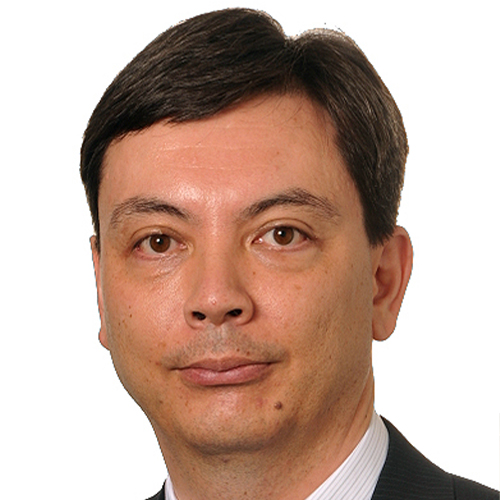
My name is Christopher Healey. I'm working as an Associate Professor at North Carolina State University. My research interests include computer graphics, scientific visualization, perception and cognitive vision, color, texture, databases, and computational geometry.
Research Projects
Election results for North Carolina, each of the 13 congressional districts are subdivided into four quadrants to show which party's candidate the district's voters selected for the 2008 Presidential election (upper-left quadrant), the most recent U.S. Senate election (upper-right), 2008 U.S. House election (lower-right), and the most recent Governor election (lower-left); color represents party (blue for Democrat, red for Republican, green for Independent), and saturation represents the winning percentage (more saturated for higher percentages); the small disc floating over the state shows aggregated state-wide results; incumbent losses are highlighted with textured X's; the height of the state represents the number of electoral college votes it controls
We have recently updated our U.S. election visualizations to include results from the 2008 U.S. election cycle. We select groups of voters within each congressional district, then compare their voting history by visualizing the winning party for President, U.S. Senate, U.S. House, and Governor elections. Our results show that most voters are not "red" or "blue", that is, they do not vote based on party affiliation alone. More comprehensive strategies that also consider the individual candidates, the state of the nation, and other factors to are used to when an individual decides how to vote.
|
NFL Visualizations:
Visualizations of NFL play-by-play for every game during the current 2008-2009 NFL season
|
|
|
Election Visualizations:
We have recently completed collecting and visualizing voter results for U.S. Presidential, U.S. Senate, U.S. House, and state Gubernatorial elections, to study the validity of the common "red state" versus "blue state" classifications |
|
Perceptual Visualization:
A study of the strengths and limitations of human perception, designed to assist with the construction of displays that support rapid, accurate, and effortless exploration and analysis of large, multidimensional datasets |
|
|
ViA: Visualization Assistant:
An investigation of methods for providing semi-automated "visualization assistance", the use of perceptual rules and AI-based mixed-initiative search techniques to construct perceptually optimal visualizations based on dataset properties and a viewer's analysis needs |
|
|
Assisted Navigation:
Techniques that combine local detail, global overviews, tracking of viewer interests, and graph traversal and camera planning techniques to assist viewers in navigating large, complex information spaces |
|
Visualizing Network Intrusions
A combination of intrusion correlation algorithms with scientific visualization and human-computer interaction techniques specifically designed for network security analysis |
|
|
Extending Interface and Display in a Limited-Capability Environment:
A study of the use of personal computing devices (PCDs) like personal digital assistants, next-generation cell phones, and portable game-playing devices to support general-purpose compute applications with sophisticated graphics and interface requirements |
|
|
Nonphotorealistic Visualization:
The combination of painterly styles from the Impressionist movement and knowledge of human perception to construct painted or "nonphotorealistic" renditions of an underlying multidimensional dataset |
|
|
Visualizing E-Commerce Data:
A study of techniques to visualize datasets that do not contain explicit spatial representations; candidate environments include financial data, web traces, and ecommerce datasets |
|
Feature Preserving Data Simplification:
A study of the use of feature preserving mesh simplification to reduce the size and dimensionality of large, multidimensional datasets |
I am investigating visualization methods that support rapid, accurate, and effective exploration and analysis of large, complex, multidimensional datasets. Many of our techniques exploit the power of the low-level human visual system. This allows much of the analysis work to be performed effortlessly, without requiring focused attention. My results make use of research from an area of cognitive psychology called preattentive processing. A detailed overview of preattentive processing is available for those who are interested. I've applied results from our visualization research to real-world problems like:
Publications
A list of publications is available online. This list includes complete citation information, as well as abstracts, and PDF for most of the papers. I also have a PDF version of my CV which is available for downloading. Some of the information in my CV is summarized in this web page.
Schedule
If you want to schedule an appointment with me, please check for available times in the calendar below.
Courses
| Fall 2008 |
|
CSC 600: Introduction to Graduate Research (course outline), F 2:20-3:10, 1231 EB-II |
| Spring 2009 |
|
CSC 462: Advanced Undergraduate Graphics (course outline), MWF 10:40-11:30, 1220 EB-II |
| |
|
CSC 761: Topics in Computer Graphics, MWF 11:45-12:35 |
Students
Current students working under my supervision in our laboratory include:
- Nazli Dokuzoglu (PhD candidate)
- Ping-Lin Hsiao (PhD candidate)
- Karthik Ramachandran (MS candidate)
A complete list of current and past students is also available.
Knowledge Discovery Laboratory
 |
Scientific visualization and computer graphics research is conducted in the Knowledge Discovery Laboratory (KDL) as part of a joint collaboration with human-computer interaction, data mining, and artificial intelligence. Dr. Jon Doyle, Dr. Dennis Bahler, Dr. Robert St. Amant, and associated students and research colleagues are also directing projects as part of KDL. Hardware resources include Sun Ultras and Sun Blades, SGI O2s, Dell Windows and Linux PCs, and RAID storage arrays by Dell and Network Appliance. We also have a Fakespace Mini Workbench, a 44-inch augmented virtual reality table that supports stereo display, ultrasonic head tracking, and 3D direct manipulation, and a Mitsubishi Diamondtouch table, a multi-user touch-sensitive tracking surface that presents calibrated images via a look-down projector. |
| Graduate and undergraduate courses in computer graphics are taught in the Multimedia laboratory. IBM has made significant donations to the multimedia lab, the department, and the College of Engineering. We received a number of IBM IntelliStation NT workstations with accelerated OpenGL hardware support for graphics research. We are also using IBM's networking hardware to support our state-of-the-art network testing facilities. In December, 1998 we received a $117,000 equipment grant from Hewlett-Packard as part of their Engineering and Computer Science University Grants Program. This grant provided us with 25 HP Kayak NT workstations with accelerated OpenGL hardware support. These workstations are being used to support undergraduate and graduate courses in graphics, HCI, and multimedia. We have recently upgraded the lab with a number of Dell Precision PCs with 17-inch flat panels. |
 |
|

 |